The Google Gemini hikers rescue on California’s Mount Shasta is getting attention for a reason that feels distinctly 2026: three novice hikers used artificial intelligence to help plan their climb, only to end up stranded overnight and in need of a rescue.
The three men, from Roseville, California, had reportedly relied heavily on Google Gemini for information about the route and what they should pack. What was supposed to be a manageable climb instead stretched far beyond their original plan, ending with the group off-route in dangerous terrain, one hiker suffering a knee injury, and rescuers having to help them back to safety.
What Happened in the Google Gemini Hikers Rescue?
The hikers rescued after using Google Gemini were three young, novice climbers from Roseville who headed to Mount Shasta in Northern California during the final weekend of August. According to authorities, they established camp at roughly 8,400 feet before setting out for the summit at about 3 a.m.
The group expected the climb to take around eight hours. But the day did not unfold that way.
Authorities say climbers on the route are advised to turn around if they have not reached the summit by noon. Instead, the three hikers continued climbing and did not reach the summit until around 7 p.m. That meant they were beginning their descent after dark, hours later than the recommended turnaround time.
That timing turned an already demanding climb into something much more serious.
The Mount Shasta Hikers Rescue Became an Overnight Ordeal
About an hour into their descent, the hikers contacted the Siskiyou County Sheriff’s Office for directions. Despite that call, they eventually wandered away from the Clear Creek Route and entered Mud Creek Canyon.
That was a dangerous turn.
One member of the group fell and injured his knee. With darkness around them, difficult terrain ahead and limited supplies, the three were forced to spend the night in the canyon.
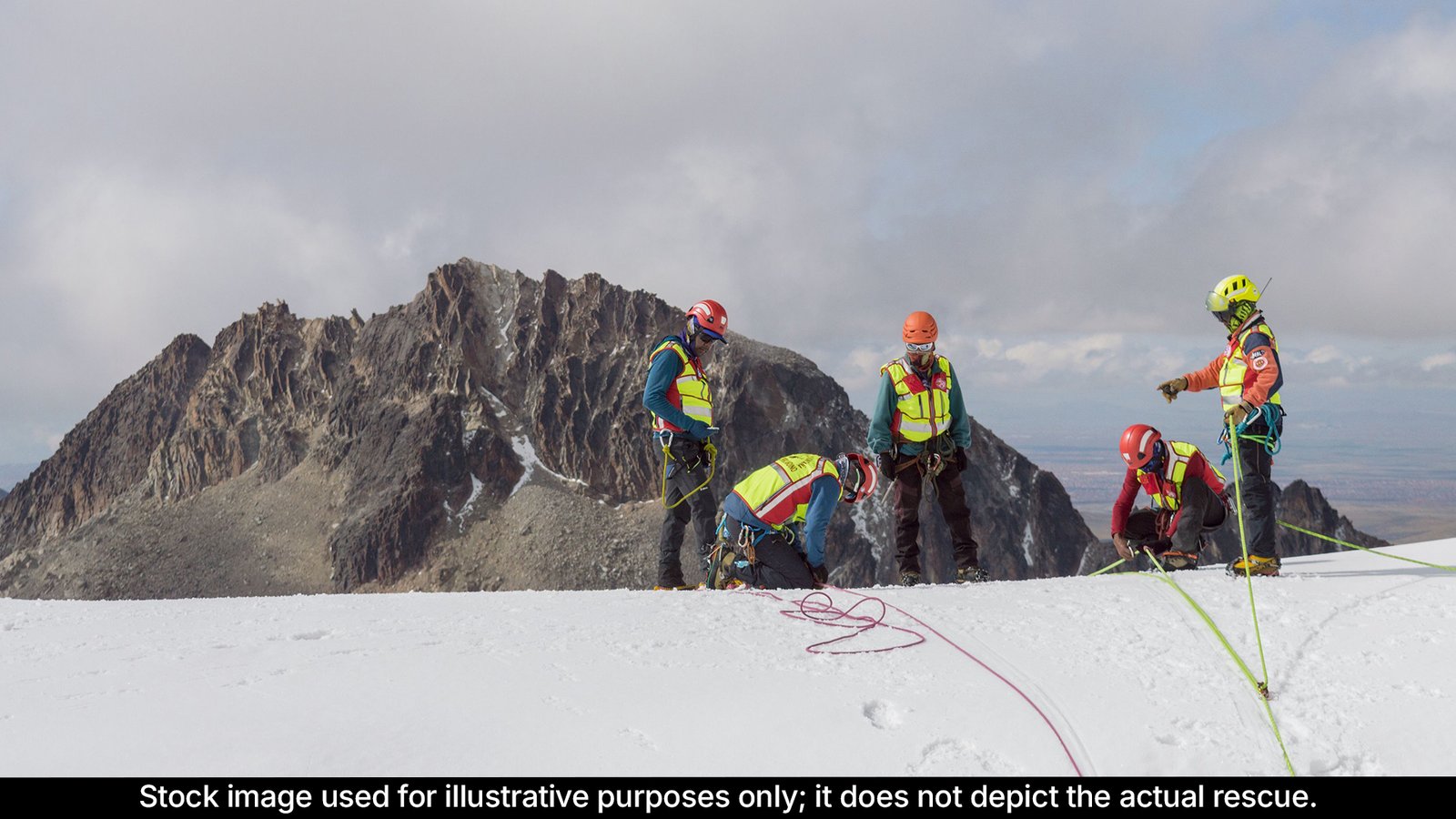
U.S. Forest Service climbing rangers reached them the following morning and provided medical assistance. Siskiyou County Search and Rescue volunteers also responded, and the hikers were eventually brought back to the trailhead safely.
Nobody died, and what could have become a far more serious mountain emergency ended with all three hikers getting home.
Where Google Gemini Entered the Story
The most unusual part came after the rescue.
The men told a sheriff’s deputy that they had relied heavily on Google Gemini hiking advice while preparing for the climb, including information about the route and what they should bring.
According to the Siskiyou County Sheriff’s Office, relying on Gemini was a “critical misstep.” Officials said the AI advice led the group to carry significantly less food and water than they ultimately needed once their expected eight-hour ascent became a multi-day ordeal.
The hikers reportedly used other online resources as well, including YouTube and AllTrails. So this was not simply a case of three people typing a question into Gemini and blindly following a single answer. The larger problem appears to have been relying too heavily on digital planning while lacking the experience needed to recognize when the plan was no longer working.
That distinction matters.
The AI-Planned Hiking Trip Had Several Warning Signs
It would be easy to look at the Gemini Mount Shasta hikers story and conclude that AI alone caused the rescue. The actual sequence of events is more complicated.
The group continued toward the summit long after the recommended noon turnaround. They reached the top around 7 p.m., meaning they had spent roughly 16 hours getting there after leaving at 3 a.m. They then attempted to descend in darkness.
Their navigation problems became worse on the way down. Reporting on the rescue also indicates that the phone being used for navigation eventually died and a backup power bank failed.
In other words, the AI hiking trip gone wrong involved several layers of risk stacking up at once: limited experience, inadequate supplies, a late summit, darkness, navigation problems and eventually an injury.
Gemini was part of the planning failure, but it was not the mountain making the final decisions for them.
Why Mount Shasta Is Not an Ordinary Hike
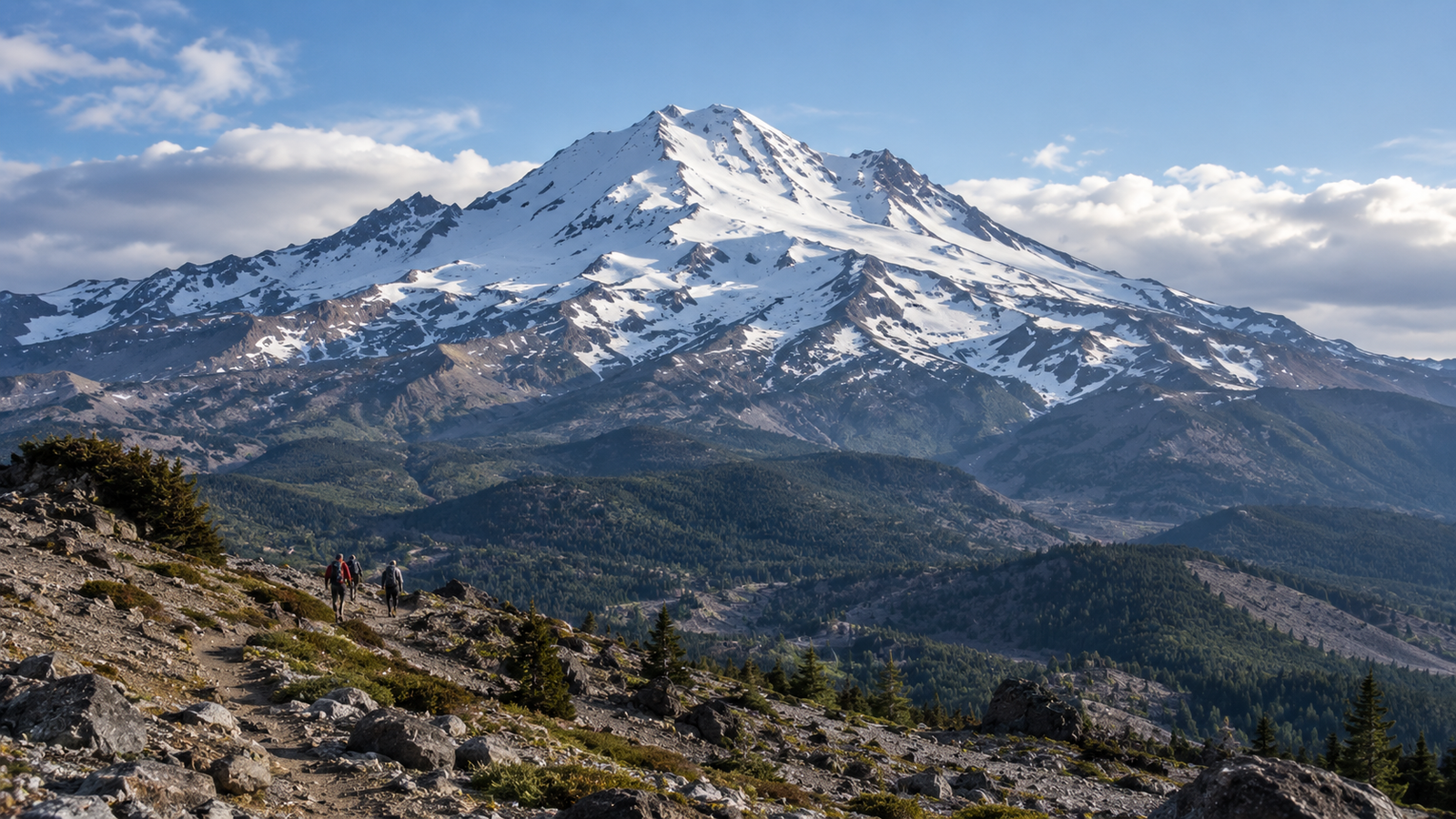
Mount Shasta rises more than 14,000 feet above sea level and is one of Northern California’s most recognizable peaks. Its popularity can also create a misleading impression: a mountain being popular does not make climbing it simple.
The Mount Shasta hikers stranded in this incident were using the Clear Creek Route. Authorities describe it as a non-technical mountaineering route, but that does not mean it is risk-free.
Climbers still need the fitness, navigation skills, supplies and judgment necessary to deal with rapidly changing circumstances. Getting off-route can put hikers into significantly more dangerous terrain, including the Mud Creek drainage where this group ended up.
That is also why something as simple as a turnaround time matters. Reaching the summit is optional. Getting back down safely is the part that cannot be skipped.
Can You Use Google Gemini to Plan a Hiking Trip?
This is probably the more useful question to come out of the Google Gemini hiking incident.
AI can be useful during the early stages of trip planning. You can use it to build a checklist, explain unfamiliar terminology or identify questions you should research before leaving home.
But there is a major difference between using AI to start your research and using it as the final authority on how much water you need, which route is safe or whether conditions are suitable for a climb.
AI-generated answers can be incomplete, outdated or simply wrong. They also cannot see the mountain in front of you.
For a serious backcountry trip, information from local rangers, official land-management agencies, current weather forecasts and established route resources should take priority. Hikers should also have more than one way to navigate rather than depending entirely on a phone or a single app.
That sounds obvious after a rescue. Before one, convenience can make it surprisingly easy to forget.
This Apparently Wasn’t the First AI-Related Problem on Mount Shasta
Perhaps the most interesting part of this story is that authorities say the problem is broader than one rescue.
Nick Meyers, the lead climbing ranger on Mount Shasta, told Business Insider that he had seen other incidents during the summer involving people who relied on AI-generated information in the area.
Those reportedly included a camper being directed toward a restricted location and another hiker working from an inaccurate AI-generated map.
That makes the hikers used AI to plan trip story less of a one-off internet oddity and more of an early example of a problem outdoor officials may increasingly have to deal with.
As AI assistants become part of everyday search and travel planning, people are likely to ask them increasingly specific questions: Which trail should I take? How long will it take? How much water do I need? Is this route safe?
The technology can produce an answer in seconds. The harder question is whether that answer should be trusted when getting it wrong has real-world consequences.
The Bigger Lesson From the Mount Shasta AI Rescue
There is an easy temptation to frame the Mount Shasta AI rescue as “AI versus humans.” I don’t think that is the most useful way to read it.
Gemini did not force the hikers to continue past the recommended turnaround time. It did not force them to descend in darkness. At the same time, hikers asking an AI system for route, timing, food and water advice may reasonably assume that the information it gives them has some grounding in reality.
Both things can be true.
AI is becoming extraordinarily convenient, and that convenience can make its answers feel more authoritative than they actually are. When the question is about rewriting an email or planning a restaurant itinerary, a mistake may be annoying. On a 14,000-foot mountain, the margin for error looks very different.
The three California hikers ultimately made it back safely. Their experience, however, offers a useful warning for anyone thinking about using Google Gemini trip planning — or any other AI assistant — for an outdoor adventure.
Use AI as one source of information, not the source of truth.
And when an experienced ranger, worsening conditions or the mountain itself is telling you to turn around, no chatbot response should outrank that.
Frequently Asked Questions
What happened to the hikers who used Google Gemini?
Three novice hikers from Roseville, California, used Google Gemini and other online resources while planning a Mount Shasta climb. They reached the summit much later than recommended, became lost during their descent, wandered into Mud Creek Canyon and spent the night stranded after one hiker injured his knee. Rescue personnel reached them the following morning.
Did Google Gemini cause the Mount Shasta rescue?
Authorities identified the hikers’ heavy reliance on Gemini as a significant planning mistake, particularly regarding food and water. However, several other decisions contributed to the emergency, including continuing long past the recommended turnaround time, descending after dark and navigation problems.
How long did the Mount Shasta climb take?
The hikers left at approximately 3 a.m. and reportedly reached the summit at about 7 p.m., roughly 16 hours later. Their original expectation had been a much shorter climb.
Were the Mount Shasta hikers injured?
One hiker fell during the descent and suffered a knee injury. Rangers provided medical assistance when they reached the group the following morning, and all three ultimately returned safely.
Is it safe to use AI for hiking trip planning?
AI can help with preliminary research, but it should not replace official trail information, current weather and conditions, local ranger advice, proper equipment or experienced judgment. For backcountry travel, critical safety information should be verified with authoritative and up-to-date sources.
